
If you want your website to rank on Google, keyword research is one of the first skills you need to learn.
Many beginners spend hours writing blog posts but never get traffic because they target the wrong keywords. Even excellent content can struggle to rank if nobody is searching for the topic.

The good news is that keyword research is not difficult once you understand the basics.
In this guide, you’ll learn how to find the right keywords, understand search intent, and create content that people are actually searching for.
What is Keyword Research?
Keyword research is the process of finding the words and phrases people type into search engines like Google.
For example, when someone searches:
- “How to start a blog”
- “Best SEO tools”
- “Digital marketing course”
These search phrases are called keywords.
Understanding your audience’s preferences through keyword research enables you to provide content that appeals to them..
Common SEO Mistakes Beginners Make
Why Keyword Research is Important
Without keyword research, writing blog posts becomes guesswork.
Good keyword research helps you:
- Find topics people are searching for
- Get more organic traffic
- Understand your audience
- Improve Google rankings
- Create content with higher chances of success
Simply put, keyword research is the foundation of SEO.
How Search Engines Use Keywords
Search engines use keywords to understand the topic of a webpage.
When Google sees relevant keywords in your content, it can better understand what your article is about.
However, modern SEO is no longer about repeating keywords many times.
Google now focuses on relevance, quality, and user intent.
Understanding Search Intent
Search intent means the reason behind a search query.
There are four main types:
Informational Intent
Users want information.
Examples:
- What is SEO?
- How does keyword research work?
Navigational Intent
Users want to visit a specific website.
Examples:
- YouTube
- Facebook login
Commercial Intent
Users are comparing products or services.
Examples:
- Best SEO tools
- Top hosting companies
Transactional Intent
Users want to buy something.
Examples:
- Buy laptop online
- Purchase SEO course.
Knowing search intent enables you to provide better content.
Types of Keywords
Short-Tail Keywords
Short keywords usually contain one or two words.
Examples:
- SEO
- Blogging
- Marketing
These keywords have high competition.
Long-Tail Keywords
Long-tail keywords contain three or more words.
Examples:
- SEO tips for beginners
- How to start a blog in 2026
- Best free SEO tools
Long-tail keywords are easier to rank for.
Beginners should focus on long-tail keywords first.
Best Free Keyword Research Tools
Google Search Suggestions
Start typing a keyword in Google and notice the suggestions.
These suggestions come directly from real searches.
Google Trends
Google Trends shows:
- Trending topics
- Seasonal keywords
- Search popularity
It is completely free.
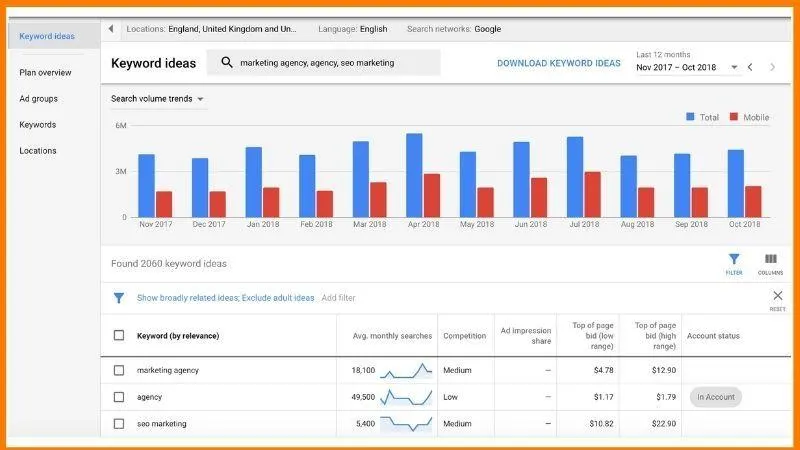
Keyword Planner
Google Keyword Planner helps find:
- Search volume
- Keyword ideas
- Competition levels
AnswerThePublic
This tool shows questions people ask online.
It is excellent for content ideas.
Ubersuggest
Ubersuggest provides:
- Keyword ideas
- Search volume
- SEO difficulty
- Content suggestions
How to Find Good Keywords
Step 1: Choose a Broad Topic
Start with a general topic.
Example:
Digital Marketing
Step 2: Find Related Keywords
Search related phrases such as:
- Digital marketing for beginners
- Learn digital marketing
- Digital marketing guide
Step 3: Check Search Volume
Look for keywords with reasonable search demand.
Step 4: Analyze Competition
Avoid highly competitive keywords if your website is new.
Step 5: Choose Long-Tail Keywords
Long-tail keywords often provide better ranking opportunities.
Keyword Research Example
Imagine you have a digital marketing blog.
Instead of targeting:
“SEO”
Target:
- SEO for beginners
- How to learn SEO
- Free SEO tools for bloggers
- SEO checklist for beginners
These keywords are more specific and easier to rank for.
Where to Place Keywords
Use keywords naturally in:
Title
Include your main keyword in the title.
URL
Keep URLs short and descriptive.
Introduction
Mention the keyword naturally in the first paragraph.
Headings
Use keywords in relevant headings.
Image ALT Text
Optimize images with descriptive ALT text.
Conclusion
Mention the keyword naturally when summarizing.
Common Keyword Research Mistakes
Targeting Very Competitive Keywords
New websites often struggle to rank for highly competitive keywords.
Ignoring Search Intent
Always create content that matches what users want.
Keyword Stuffing
Do not repeat keywords unnaturally.
Skipping Research
Never publish content without researching keywords first.
Choosing Irrelevant Keywords
Focus on keywords related to your niche.
How Many Keywords Should You Target?
For most blog posts:
- 1 primary keyword
- 2–5 related keywords
This creates a natural content structure.
Avoid trying to target too many unrelated keywords.
Keyword Research Tips for Beginners
Focus on User Needs
Think about the questions your audience wants answered.
Study Competitors
Look at what successful websites are ranking for.
Create Helpful Content
Keyword research helps attract visitors, but quality content keeps them engaged.
Continue improving your research techniques because SEO is constantly changing.
Keep Learning
Future of Keyword Research in 2026
Keyword research is becoming more focused on:
- Search intent
- User experience
- Voice search
- AI-powered search results
Google now understands context better than ever before.
This means creating genuinely helpful content is more important than simply inserting keywords.
Keyword research tips-
Keyword research is one of the most important SEO skills .
It helps you understand your audience, create better content, and improve your chances of ranking on Google.
As a beginner, start with long-tail keywords, use free keyword research tools, and focus on solving real user problems.
Remember, successful SEO begins long before you publish an article. It starts with choosing the right keyword.
Master keyword research, and you’ll build a strong foundation for long-term blogging success.