
Every website owner wants more traffic. Whether you run a blog, business website, affiliate site, or online store, visitors are the lifeblood of your online success.
Many beginners believe that getting traffic requires spending money on advertisements. While paid ads can bring quick visitors, organic traffic offers long-term growth without ongoing advertising costs.
Search engines like Google are the source of organic traffic, as users find your content organically through search results..
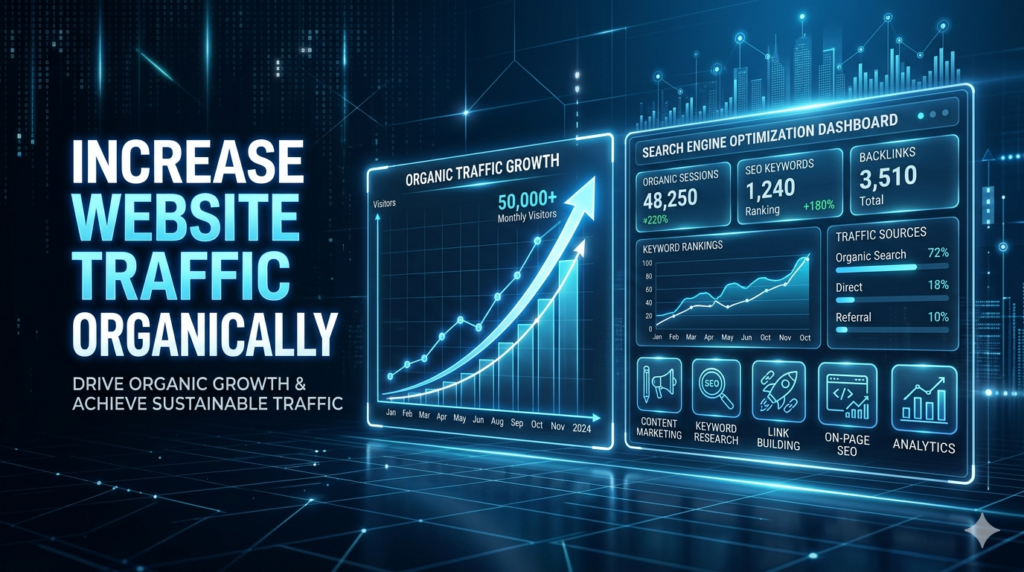
The best part? Once your content starts ranking, it can continue bringing visitors for months or even years.
In this guide, you’ll learn practical and beginner-friendly strategies to increase website traffic organically and build sustainable online growth.
What Is Organic Traffic?
Visitors who discover your website through unpaid search engine results are referred to as organic traffic.
For example, if someone searches:
“Best SEO tips for beginners”
and clicks your article from Google, that visitor is considered organic traffic.
Organic traffic is valuable because:
- Visitors are actively searching for information
- It is free
- It builds long-term website authority
- It often converts better than random traffic
How to Write SEO-Friendly Blog Posts: A Complete Beginner’s Guide for 2026
How to increase website traffic organically
Many successful websites receive most of their visitors from search engines.
Benefits include:
| Benefit | Why It Matters |
|---|---|
| Free Traffic | No advertising costs |
| Higher Trust | Users trust organic results |
| Long-Term Growth | Content can rank for years |
| Better Conversions | Visitors already have intent |
| Brand Awareness | More visibility online |
Increase website traffic organically is often the most sustainable traffic source for websites.
1. Focus on Keyword Research
Keyword research is the foundation of SEO.
Before creating content, find out what people are searching for.
Good keyword examples:
- Digital marketing for beginners
- Best blogging tips
- How to improve website speed
Targeting the right keywords helps Google understand your content and connect it with the right audience.
Beginner Tip
Focus on long-tail keywords because they are easier to rank for and often attract more targeted visitors.
2. Create High-Quality Content
One of the most important ranking factors is still content.
Google rewards content that:
- Solves problems
- Answers questions
- Provides value
- Is original and useful
Instead of writing short articles with little information, create detailed content that fully covers the topic.
Example
A 1,500-word guide explaining SEO basics will often perform better than a 300-word article with limited information.
3. Optimize for Search Intent
Search intent means understanding what users want when they search.
If someone searches:
“How to start a blog”
Instead of a sales page, they anticipate a detailed manual..
Always create content that matches user expectations.
This improves rankings and user satisfaction.
4. Publish Content Consistently
Many websites stop growing because they publish content irregularly.
Maintaining consistency makes it easier for search engines to identify the activity of your website..
A simple content schedule:
- 1 blog post per week
- 2 blog posts per week if possible
Quality is always more important than quantity.
5. Improve On-Page SEO
Search engines can better comprehend your content with the use of on-page SEO.
Key elements include:
Title Tags
Include your main keyword naturally.
Meta Descriptions
Write clear descriptions that encourage clicks.
Headings
Use H1, H2, and H3 headings properly.
Internal Links
Connect related articles on your website.
Good on-page SEO improves visibility and user experience.
6. Make Your Website Mobile-Friendly
Most internet users browse on smartphones.

Google uses mobile-first indexing, meaning it primarily evaluates the mobile version of your website.
Ensure your website:
- Loads properly on mobile devices
- Has readable text
- Offers easy navigation
A mobile-friendly website often ranks better.
7. Improve Website Speed
Visitors dislike slow websites.
Users may abandon a website if it takes a few more seconds to load..
Ways to improve speed:
- Compress images
- Use caching plugins
- Choose quality hosting
- Remove unnecessary plugins
Faster websites improve user experience and SEO performance.
8. Use Internal Linking
Internal links help users discover more content on your website.
Benefits include:
- Better navigation
- Increased page views
- Improved crawlability
- Stronger site structure
Whenever possible, link to relevant articles within your content.
9. Optimize Images
Images make content more engaging but can also slow websites if not optimized.
Best practices:
- Compress images
- Use descriptive filenames
- Add ALT text
Example ALT text:
“Organic increase website traffic growth strategy”
Image optimization improves accessibility and page speed.
10. Update Old Content
Many website owners focus only on publishing new articles.
However, updating old content can be equally powerful.
Update:
- Statistics
- Examples
- Screenshots
- SEO elements
Fresh content often performs better in search results.
11. Build Quality Backlinks
Backlinks are links from other websites pointing to your content.
Google sees quality backlinks as trust signals.
Ways to earn backlinks:
- Create valuable content
- Write guest posts
- Share original research
- Build relationships with other bloggers
Focus on quality rather than quantity.
12. Use Social Media to Amplify Content
Social media may not directly improve rankings, but it helps increase visibility.
Share content on platforms like:
- X
More visibility often leads to more clicks, shares, and potential backlinks.
13. Answer Common Questions
People frequently search for answers online.
Create content that solves common problems in your niche.
Examples:
- How to start blogging
- Best SEO tools
- Website speed optimization tips
Helpful content attracts visitors naturally.
14. Focus on User Experience
Google wants users to have a positive experience.
Improve:
- Readability
- Navigation
- Page speed
- Mobile usability
A satisfied visitor is more likely to stay longer and return later.
15. Be Patient and Consistent
One of the biggest mistakes beginners make is expecting instant results.
SEO takes time.
Depending on your niche and competition, results may take:
- A few weeks
- Several months
- Sometimes longer
Consistency is what separates successful websites from unsuccessful ones.
Common Mistakes That Reduce Organic Traffic
Avoid these common errors:
❌ Keyword stuffing
❌ Publishing duplicate content
❌ Ignoring mobile users
❌ Slow website speed
❌ Poor content quality
❌ Lack of internal linking
Fixing these issues can significantly improve traffic over time.
Essential Tools for Organic Traffic Growth
Useful tools include:
- Google Search Console
- Google Analytics
- Google Trends
- Rank Math
- Yoast SEO
- Grammarly
These tools help monitor performance and improve optimization.
Final tips
Learning how to increase website traffic organically is one of the most valuable skills for bloggers, business owners, and digital marketers.
The key is to focus on creating helpful content, optimizing your website, and consistently improving user experience.
Organic traffic does not happen overnight, but the results are often more sustainable and valuable than paid advertising.
Start with keyword research, publish quality content, improve SEO, and stay consistent. Over time, your website can attract a steady stream of visitors and continue growing naturally